
媳妇的美好时代
Nanjing Massacre memorial hall receives new evidence of Japanese invasion on 81st anniversary of Japan’s surrender_我的网站

A |
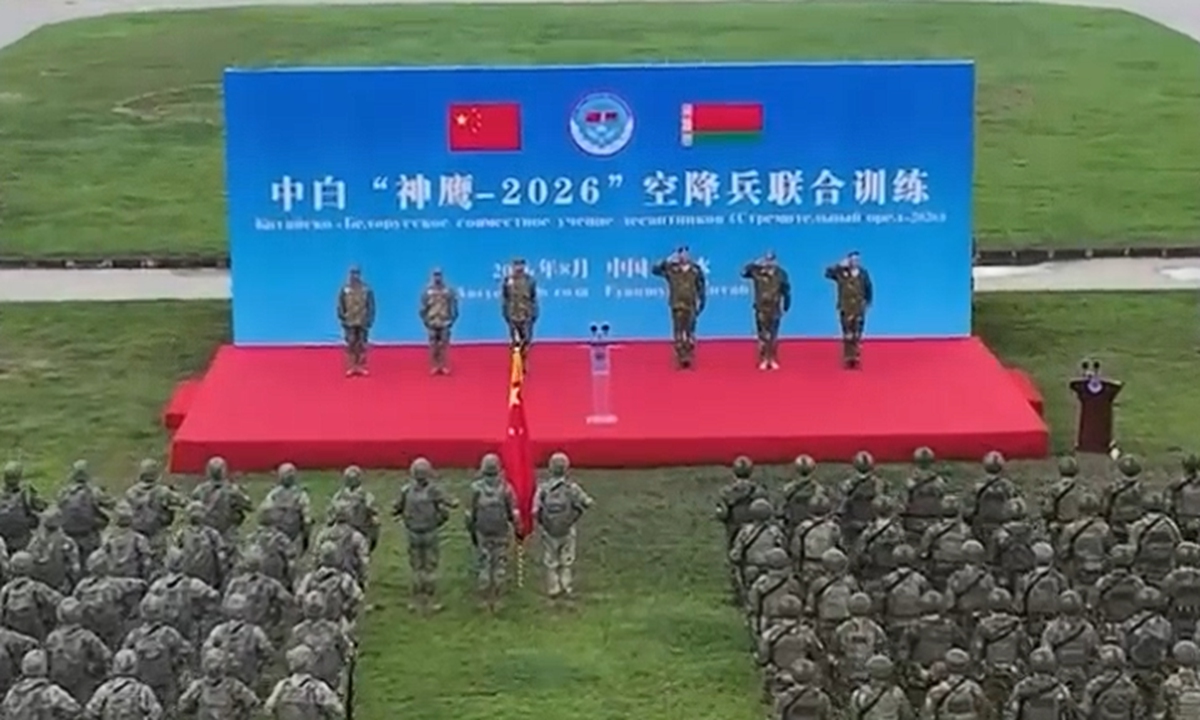
Focusing on "joint counter-terrorism operations in urban terrain," the training will focus on subjects such as surveillance and counter-surveillance, seizure-and-control and protection, and elimination and defense, Xinhua reported.
In addition, the two sides will organize seminars, friendly football matches and cultural exchange activities during the joint training, said the report.
As the fourth iteration, the joint training will help enhance the combat capabilities of the participating troops and deepen substantive cooperation between the two militaries, said Xinhua.
While details on the equipment deployed by both sides have not yet been disclosed, Wang Yanan, editor-in-chief of Beijing-based Aerospace Knowledge magazine, told the Global Times on Thursday that Belarus is likely to follow its traditional practices, focusing on low-altitude small-scale airborne operations, possibly using Il-76 large transport aircraft, while China may deploy Y-9 or Y-20 transport aircraft for low-altitude delivery.
The joint training is not a one-way learning exercise, but rather a process of building a cooperative foundation and familiarizing both sides with each other's operational habits in the counter-terrorism domain, Wang said.
While China has made significant progress in counter-terrorism and maintaining stability in recent years, the expert said, airborne troops have been rarely used in counter-terrorism operations, as local police and armed police forces are generally sufficient to handle such situations.
Airborne troops are better suited for special counter-terrorism scenarios, such as large-scale counter-terrorism operations or cases where terrorists have occupied urban building complexes and need to be forcibly removed. This joint training likely simulates such scenarios, Wang said.
The previous iteration of the Swift Eagle series airborne joint counter-terrorism training between China and Belarus took place in 2015.
In June 2015, a PLA Air Force spokesperson announced that China had dispatched an airborne special operations detachment to Belarus to participate in the Swift Eagle 2015 joint counter-terrorism training.
According to China Military Online, the training followed the 2011 and 2012 joint exercises between the two countries' airborne forces, again focusing on joint counter-terrorism operations.
The spokesperson noted that Belarus is a traditional friendly country to China.
Conducting joint airborne training with Belarus helps consolidate traditional bilateral friendship, deepen practical exchanges and cooperation between the two militaries, and enrich the content of the comprehensive strategic partnership between the two countries.
Wang noted that Belarus, located to China's west, and China share a common long-term interest in discussing counter-terrorism.
After a hiatus of several years, the resumption of the Swift Eagle joint training provides an opportunity to promote in-depth cooperation in defense and mutual trust, serving as a point of common interest for both sides.
Wang noted that the PLA's domestic training exercises have undergone profound changes in recent years.
For example, the documentary series Zhìshèng (Victory) broadcast in early August, showed training conducted with a no-script model, with both sides engaging in free-form confrontations and evaluating results based on actual combat performance, promoting the integration of personnel and equipment systems to generate new operational capabilities. This model has already produced notable results.
More broadly, Wang said, recent joint exercises between the PLA Air Force and foreign militaries have yielded multiple benefits, primarily on two levels.
First, they lay the groundwork for potential future joint operations, whether in counter-terrorism, maintaining stability or major international security issues, as mutual familiarity is essential for effective cooperation.
Second, joint exercises themselves contribute to regional stability. When friendly countries in the region reach consensus on security issues and conduct regular military cooperation, it has a stabilizing effect on regional security.
Overall, the PLA is building a more open and flexible military cooperation framework through both enhanced domestic combat-oriented training and expanded international joint exercises, Wang said.
。

B |
August 15 this year marks the 81st anniversary of Japan’s unconditional surrender in World War II. A ceremony themed “Nanjing Will Never Forget” was held on Saturday at the Memorial Hall of the Victims in the Nanjing Massacre by Japanese Invaders in Nanjing, East China’s Jiangsu Province.
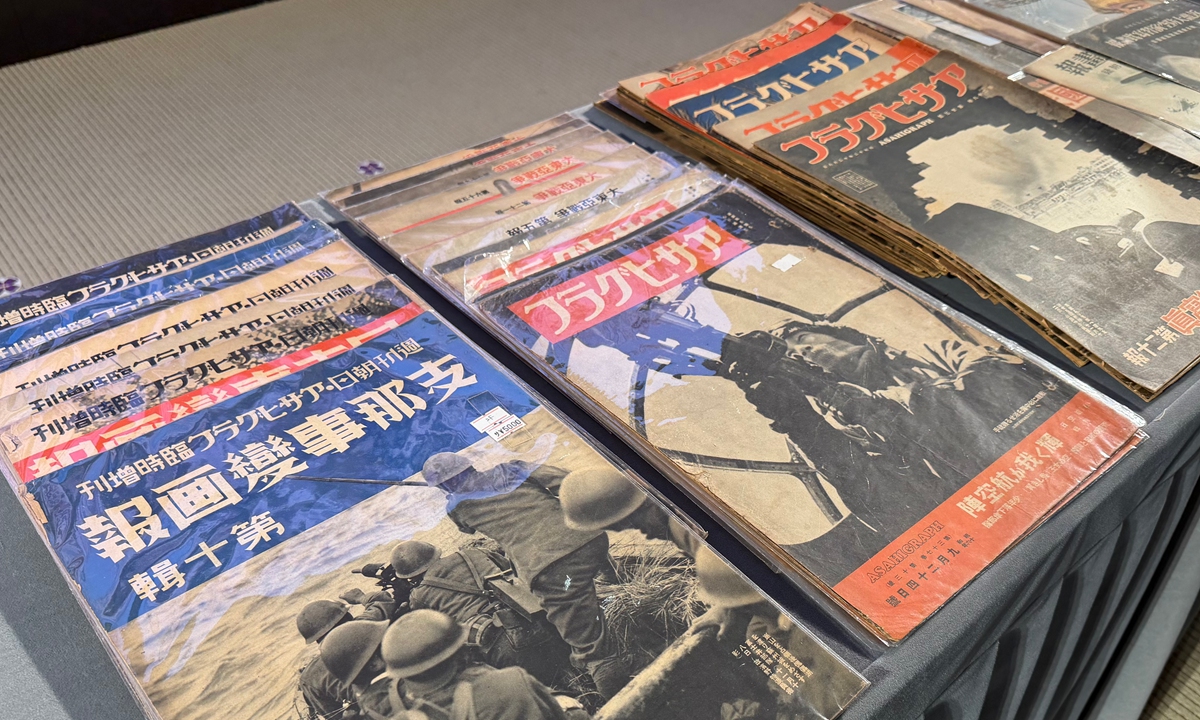
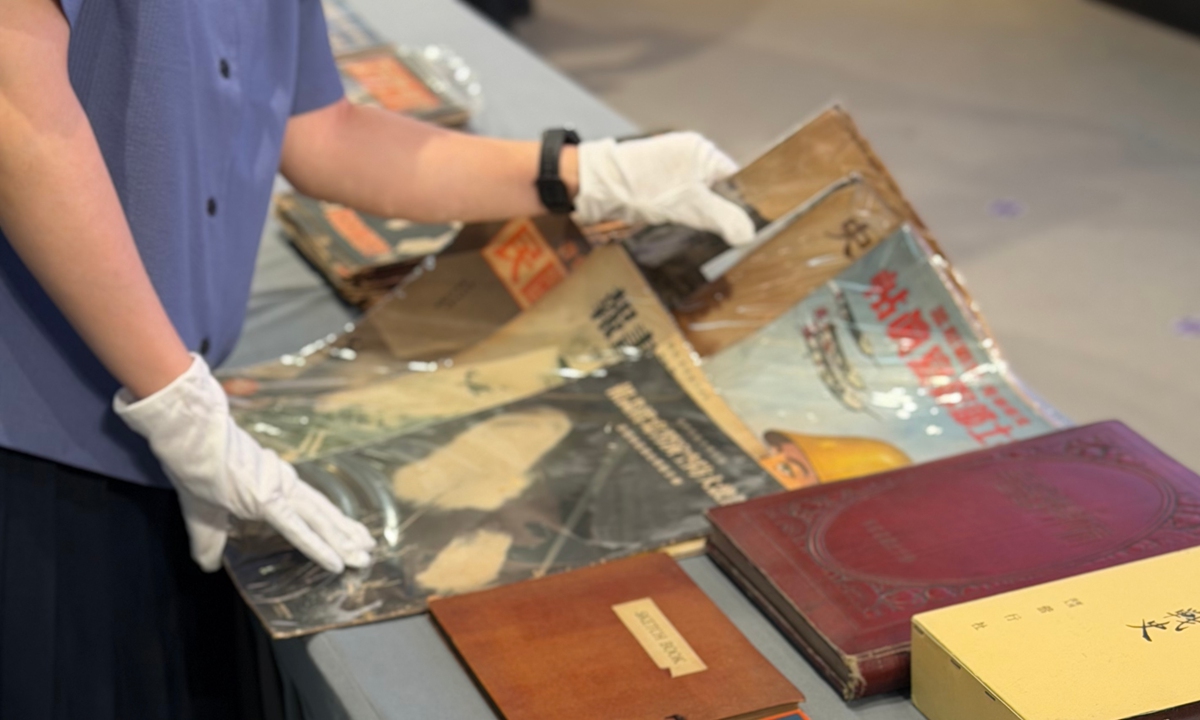
At the ceremony, a batch of newly acquired artifacts, historical materials, and documents related to the War of Resistance Against Japanese Aggression, including Japanese soldiers’ private letters, wartime postcards, educational materials on gas warfare, news compilations and French diplomatic archives, was officially added to the memorial hall's collection.
Overseas‑sourced historical archives drew wide attention among the donated materials. French youth Marcus Detrez, his compatriot Bastien Rata and Chinese youth Zhong Haosong jointly donated a set of historical documents on Japan’s aggression against China from the French diplomatic archives in Nantes, as well as Japanese‑language materials they had collected in Japan.
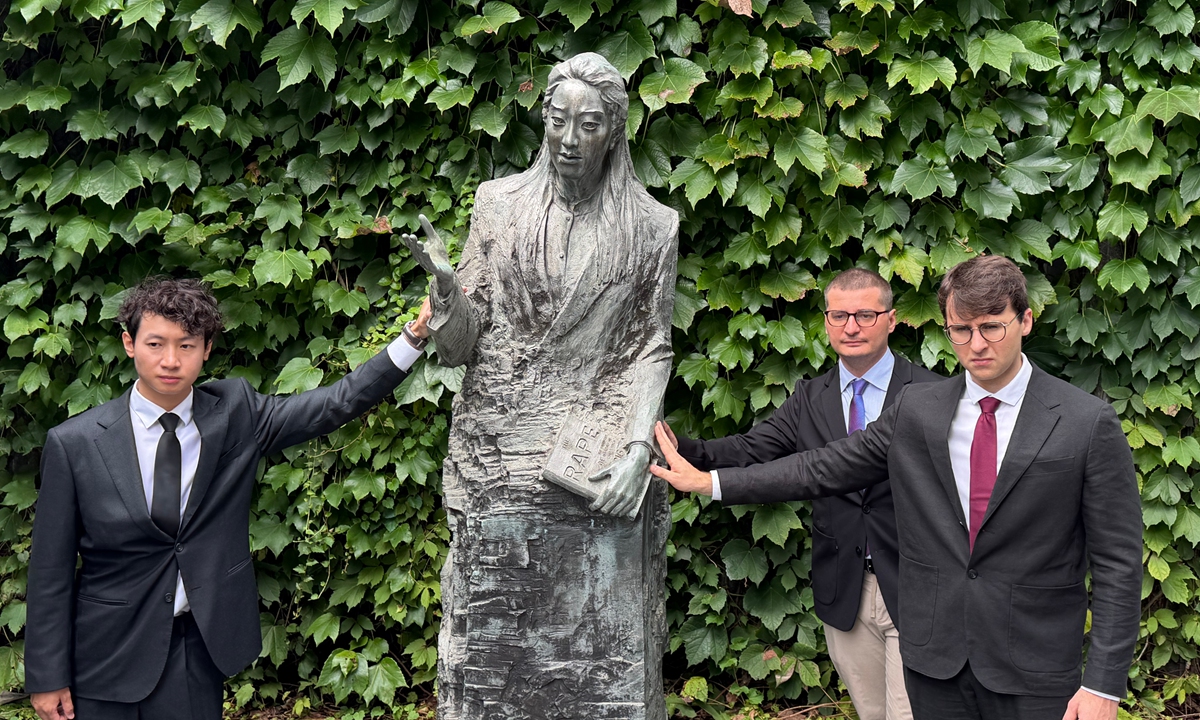
Marcus told Global Times on Saturday that, through these archives and related research, they have gained a deeper understanding of the brutality of the Nanjing Massacre. He said that collecting these materials was also aimed at conducting more educational work to help more people learn about this period of history.
The materials brought back from Japan by Zhong include albums of documentary paintings of the Japanese invasion of China by artists accompanying the invading Japanese army, privately taken photo albums of the invading Japanese troops, and original publications from the same period, including the Asahi Shimbun. These materials all come from original Japanese records.
The overseas historical materials were collected over an extended period. Zhong said they contacted sources online and searched through antique and secondhand book channels while continuing to collect materials in Japan.
The new collection on Saturday also includes materials gathered by Chinese youths. High school student Yu Ningpeng and Xu Weizhe donated 12 private letters written by a soldier of the 20th Regiment of the Imperial Japanese Army’s 16th Division, documenting his experiences during the invasion of China. One letter, dated December 20, 1937, contains accounts related to the Japanese occupation of Nanjing.
Meng Guoxiang, a researcher at the Institute for National Memory and International Peace Studies, told the Global Times at the event on Saturday that historical research places great importance on the sources of historical materials, with original archives holding significant value.
Some of the materials donated this time were records left by the perpetrators themselves, while archives from third-party countries such as France provide another perspective, Meng said, adding that cross-checking materials from different sources can help build a more complete body of evidence.
Notably, alongside the handover of the latest batch of archival materials, the memorial hall also held a ceremony to induct the fifth group of inheritors of the historical memory of the Nanjing Massacre. Six people were named as the latest inheritors, including descendants of Nanjing Massacre survivors, descendants of eyewitnesses, and descendants of international friends. They help pass on historical memory through family traditions, educational activities and efforts to raise public awareness of history.
In recent years, a growing number of post-1990s and post-2000s private collectors, as well as foreign nationals, have joined efforts to collect historical materials, a trend that has deeply moved and impressed Zhou Feng, curator of the Memorial Hall of the Victims in Nanjing Massacre by Japanese Invaders, he told the Global Times.
Zhou said that preserving history and historical records was once widely seen as the responsibility of museums, cultural institutions and professional scholars; however, today, more and more private collectors are taking the initiative, spending their own money to collect historical materials scattered across China and overseas.
Historical memory, he said, needs to be passed down from one generation to the next. The donors come from different generations, nationalities and backgrounds, but share a common respect for historical truth and commitment to justice.
Since the beginning of this year, the memorial hall’s Nanjing Massacre Documents Center has launched a global campaign to collect relevant historical materials, receiving support from various sectors both in China and abroad. Nearly 100 donors from China and overseas have so far contributed materials to the memorial hall, Zhou said.
。

C |
Current article:http://eyivloa.tichannangenzhuchuapin.cfd/news/20260826_312703.html
Published on:09:19:15
最新文章
- Sultan Hassan al Bolkiah of Brunei is arriving tomorrow in Bangladesh
- 23 humanoid robot teams compete in rescue missions at 2nd WHRG, facing real-world complexity beyond dancing in coordination
- 意大利传奇球星、米兰名宿巴雷西离世,享年66岁
- 从雪道到山野 吉林“轻极限”运动撬动暑期文旅经济
- 詹姆斯火力全开场均35.7分 湖人生涯56次出手25+
- 星海图与京东达成三年战略合作
- 618购物节来了!淘宝京东618活动最优惠时间段已确定:从6月17日晚8点至6月18日24点这28小时内最便宜划算!
- 吉祥航空:公司实际控制人王均金与王瀚续签了《一致行动协议》
- 祝乌日古木拉生日快乐!火力全开,持续在赛场上攻城拔寨
- “大的要来了”:小米玄戒芯片新进展今天公布,消息称预计会同步官宣首款新机
标签云
热门文章
- 锚定“两地一中心”,2030年突破2万亿 杭州服务业扩能提质“路线图”出炉
- 晒卤肉饭照片被发现盗图后陈时中道歉,网友:这人有什么是真的?_阿贵_脸书
- 为 iPhone Ultra 准备好:苹果 iOS 27 代码首现双电芯设计
- 一习话丨“培育发展新质生产力的新动能”
- 超700马力/2027年3月推出 全新宝马M3纯电动版内饰谍照曝光
- 中国人寿保险(集团)公司原董事长王滨被逮捕 曾被指“制造、放大金融风险”_中国人寿原董事长王滨被逮捕_违纪
- 长安汽车:公司目前生产已全面恢复并积极优化9月排产方案_相关_互动
- 倒计时2天丨吉南辽北蒙东六市深化合作高质量协同发展第三届会议将在我市召开
- 全省粮食作物秋收已超九成
- 我市召开应对极端天气工作部署会议