
对话
仅此一台!兰博基尼发布 Temerario Tricolore 特别定制版车型_我的网站

A |
In economics, overcapacity is a dynamic and relative concept. Supply-demand balance is temporary, and imbalance is the norm. The Western narrative that equates the sheer scale of China's production capacity directly with "overcapacity" is, frankly, economically illiterate. It conflates size with pathology.
Consider the math. China's manufacturing sector accounts for roughly 30 percent of global manufacturing value-added - a dominance unmatched since the post-war US. Yet this reflects not overcapacity but competitive capacity. The critics ignore that China's trade surplus in 2025 reached a record $1.2 trillion, roughly equivalent to the GDP of a top-20 economy like Saudi Arabia. They ignore that Chinese exports carry high import content - foreign value-added accounts for nearly half of gross export value - meaning China's capacity integrates global supply chains rather than displacing them.
The judgment lacks rigor because it applies a static snapshot to a dynamic system. It assumes that if China produces more than it currently consumes domestically, the surplus is automatically "overcapacity." Nonsense. By that logic, Germany's persistent trade surplus in automobiles and machinery would constitute chronic overcapacity. It does not, because German capacity serves global demand. So does China's. The narrative isn't economics. It's politics dressed in economic jargon.
Western critics attribute the price advantages of Chinese green technology products to "government subsidies" and "market distortion." This is a convenient story. It is also wrong. The global competitiveness of China's green technology industries stems from four interconnected factors: massive domestic market scale, decades of sustained infrastructure investment, a highly educated STEM workforce, and fierce intra-industry competition. China's NEV purchase-tax exemptions, extended through 2027, total approximately 520 billion yuan ($77.05 billion). Substantial? Yes. But causally linked to overcapacity? No.
The causal chain critics imagine - subsidies → artificial competitiveness → overproduction - collapses under scrutiny. The EU's IPCEI battery programs allocated over 6 billion euros, plus EIB financing. The US CHIPS Act appropriated $54.2 billion for semiconductors, while the Inflation Reduction Act funnels hundreds of billions into clean energy. All major economies subsidize strategic industries. The difference is that China converted subsidies into systemic efficiency: its nominal lithium-ion cell capacity reached approximately 2.2 TWh by end-2023, driving global average battery pack prices down 20 percent year-on-year to $115 per kilowatt-hour in 2024. That is not distortion. That's innovation at scale.
Chinese firms filed 20,081 European patent applications in 2024 - 10.1 percent of the total, with battery technology patents surging 79 percent year-on-year. Patents reflect innovation, not subsidy dependency. The causal link between subsidies and overcapacity is weak; the link between scale, innovation, and competitiveness is robust.
Meanwhile, global demand for green and low-carbon transition is experiencing explosive growth. The International Energy Agency projects that renewable capacity additions must triple by 2030 to meet Paris Agreement targets. In this context, labeling China's wind, photovoltaic, and battery capacity as "overcapacity" is not merely wrong - it is dangerously counterproductive.
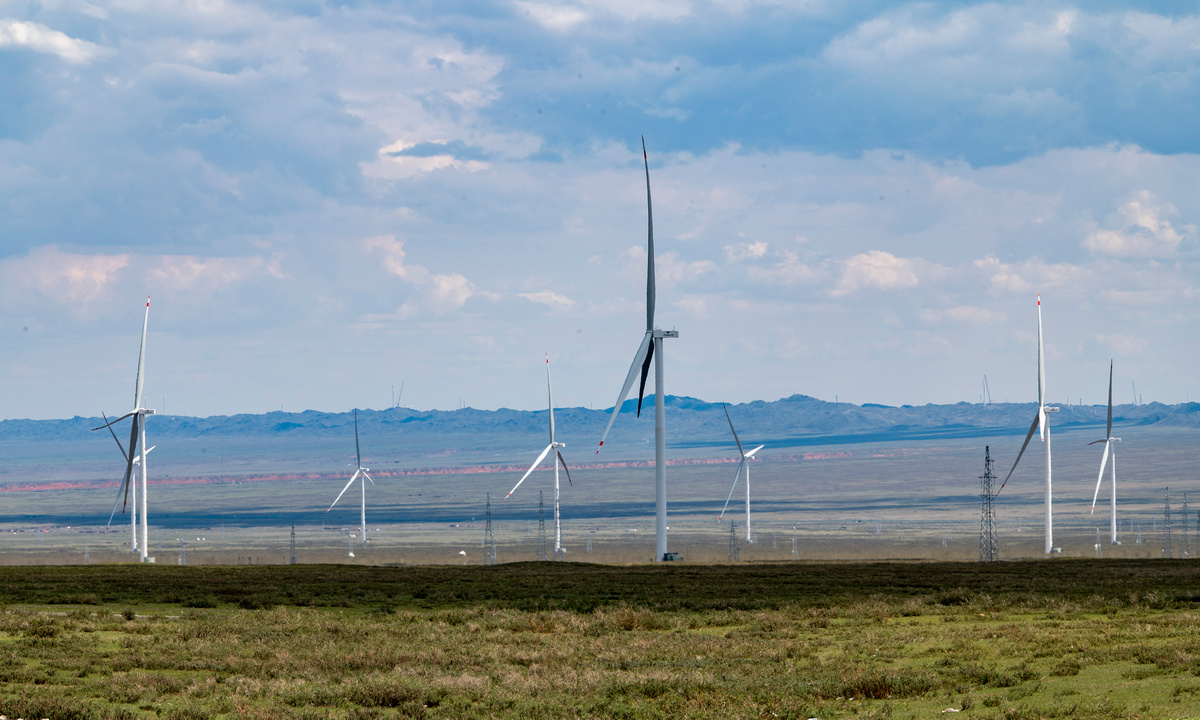
In fact, China's capacity has played an indispensable role in advancing the global energy transition. Chinese solar module production costs have fallen roughly 90 percent over the past decade. Goldman Sachs Research notes that China manufactured approximately 86 percent of global solar modules, 80 percent of lithium-ion batteries, and 68 percent of electric vehicles in 2024. This is not overcapacity dumped on foreign markets; it is capacity the world desperately needs.
The "overcapacity" label assumes a zero-sum game where Chinese production crowds out others. The reality is synergistic: Chinese capacity lowers global clean energy costs, enabling faster deployment worldwide. The "overcapacity" label holds only if one believes the world should slow decarbonization to protect less competitive producers and to empower those that deliberately employ "burn, baby, burn" tactics. That's industrial protectionism intersecting with brown imperialism, and it's disproportionately impacting the Global South, which is more vulnerable to climate breakdown, precisely when it's finally trying to shake off centuries of systemic Western exploitation and suppression.
Furthermore, the disparity in how the West treats its own industrial policy versus China's is glaring. When the US funnels $52.7 billion through the CHIPS Act for semiconductors, or when the EU subsidizes Airbus, or when American agricultural subsidies distort global food markets, the silence from Western media is deafening. When China gains an edge in manufacturing, it faces media offensives and policy restrictions.
This is not inconsistency. This is strategy. The underlying motivation is the "China threat" rubric - a framework that treats China's development itself as a danger to the Western-led order. Countries wagging their fingers at China do so not because China violates economic rules they themselves follow, but because China succeeds under rules they once wrote to their own advantage.
These accusers possess their own national industrial policies and subsidies. They have long exploited historical and contemporary advantages against China and developing countries. They have not competed well, have not provided themselves with good governance, and have not invested adequately in their own infrastructure, education, and R&D. They have allowed their own leading industries to seek monopolistic positions detrimental not only to others but to their own consumers. Rather than reform themselves, they blame China.
In these contexts, the cry of "China Shock 2.0" is the latest iteration of an old playbook: frame China's development as a threat to global stability rather than a contribution to global progress. The claim that China's advances in renewable energy and AI will send more serious shock waves than traditional manufacturing displacement is analytically flawed and politically motivated.
First, the premise is false. China is not reducing the market share of developed countries through unfair means; it is outcompeting them through innovation, scale, and efficiency. According to Goldman Sachs Research, China's "new three" green technology sectors alone contributed around one percentage point to the country's 5.4 percent nominal export growth in 2025. This is competitive capacity serving global demand, not overcapacity dumped on foreign markets.
Second, the "shock" framing ignores history. China maintained production and trade flows in 2020 while major Western economies crashed, providing essential goods to global markets, likely saving millions of lives while mitigating what would have been greater global economic harm. The "shock" is not to the global economy; it is to Western complacency.
Third, the argument is self-contradictory. The critics want China to be simultaneously weak enough to dismiss and strong enough to fear. If China's high-tech development is genuinely formidable - so innovative and efficient that it threatens to displace developed economies - then it is delivering precisely the technological progress the world needs to meet climate goals. Restricting it through tariffs and barriers would harm global innovation, raise energy costs for developing countries, and slow decarbonization. The critics would be sacrificing the planet to protect their own complacency.
"China Shock 2.0" is a rhetorical device to justify protectionism. It replaces engagement with containment, competition with confrontation. The world does not need another shock doctrine. It needs cooperation, investment, and the recognition that China's rise is not a threat but an opportunity - for green transition, for technological progress, for shared prosperity, and for a shared future.
The author is a professor of politics and international relations and director of the Center for Ecological Civilization at East China Normal University in Shanghai. [email protected]
。 8 月 25 日消息,时隔 15 年,Tricolore 再次回归兰博基尼。兰博基尼近日借蒙特雷汽车周之机低调发布了全新的 Temerario Tricolore,这也是自 2011 年 Gallardo LP 550-2 Tricolore 之后,首款再次使用 Tricolore 名称的车型。据了解,这款全球唯一的特别版车型由兰博基尼 Centro Stile 设计中心与 Ad Personam 个性化定制部门联合打造。车身下半部分采用 Blu Marinus Shiny 蓝色涂装,上半部分则使用 Bianco Monocerus 白色。车顶、后视镜和轮毂则喷涂了 Glossy Nero Noctis 亮黑色漆面,并搭配红色刹车卡钳,为整车增添了一抹鲜艳的色彩。更引人注目的是,新车的引擎盖上采用了一条绿色、白色和红色相间的条纹,灵感来自意大利国旗,这也是 Tricolore 名称的由来。它延续了初代 Tricolore 的设计元素,不过当年的 Gallardo LP 550-2 Tricolore 采用的是偏向一侧、贯穿整个车身的三色条纹。兰博基尼目前仅公布了几张内饰图片。Temerario Tricolore 的车内采用 Nero Ade 黑色内饰,并以 Rosso Alala 红色缝线进行点缀。车门饰板上还加入了车辆轮廓图案和 Tricolore 专属标识,进一步凸显其特别版身份。

B | 动力方面,新车搭载熟悉的插电式混合动力系统,由一台双涡轮增压 4.0 升 V8 发动机、三台电动机、8 速双离合变速箱以及一块 3.8 kWh 电池组成。整套系统综合最大输出功率达到 907 马力(677 kW / 920 PS),峰值扭矩为 730 牛 · 米。得益于强大的动力性能,这款双门跑车从 0 加速至 100 公里 / 小时仅需 2.7 秒,最高时速可达 343 公里。作为对比,15 年前的后驱版 Gallardo LP 550-2 Tricolore 搭载的是一台 5.2 升 V10 自然吸气发动机,最大功率为 542 马力(405 kW / 550 PS),峰值扭矩为 540 牛 · 米。换句话说,新一代 Temerario Tricolore 的最大功率相比前辈增加了约 365 马力,动力水平已经接近翻倍。
Current article:http://eyivloa.tichannangenzhuchuapin.cfd/news/20260826_4102354.html
Published on:14:17:52
[责任编辑: 纯密]
评论
-
关于我们 | 我的网站 版权所有
Copyright ? 2019 我的网站 All Rights Reserved